


In scenarios such as web crawlers, cross-border business operations, ad verification, and API calls that rely on services, Novproxy users often encounter a core decision-making dilemma: Should they opt for frequent IP switching to ensure anonymity in round-robin conversations, or should they prioritize maintaining a fixed IP to ensure session continuity in sticky sessions? This article systematically examines the core differences between the two session modes of Novproxy and provides clear selection recommendations based on actual business scenarios.
I. Comparison of Core Differences
What is a rotation conversation?
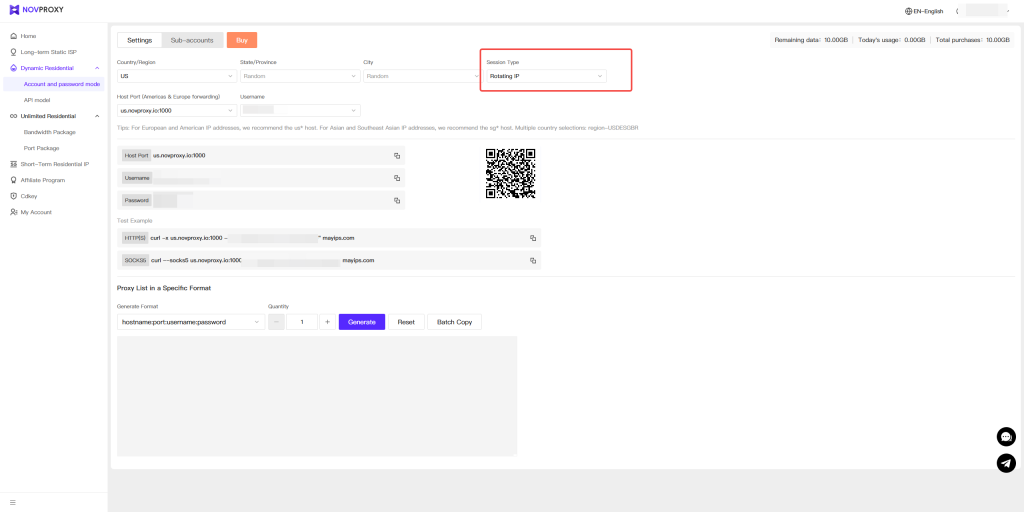
IP rotation refers to the process of randomly changing your IP address to another IP address.
What is a sticky conversation?
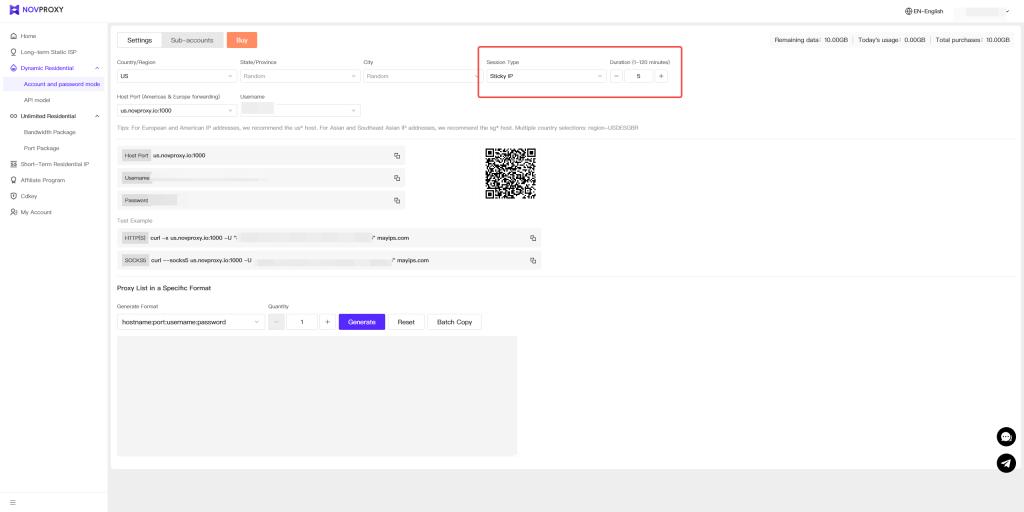
The sticky session will retain the same IP address for a specific period of time: 1 minute, 10 minutes, 30 minutes, and so on. This is the sticky session. After setting the time you desire, if you exceed that period, you will obtain a new IP address.
| Dimension | Rotation conversation | Sticky conversation |
| IP replacement mechanism | Automatically assign a new IP for each request | Maintain the IP until timeout / expiration |
| Anonymity | ★★★★★ (High-frequency switching to avoid tracking) | ★★★★ (Fixed-duration IP is prone to being flagged) |
| Session continuity | ★ (Stateless, unable to maintain login status) | ★★★★★ (Supports long-term sessions) |
| Key parameters | No additional configuration required | Configuration required for duration |
| Timeout rules | Instant switching | 1-120 minutes |
II. Scenario-based Selection Suggestions
1.Prioritize scenarios involving alternating conversations
- Large-scale data collection: When a crawler fetches multiple pages, changing the IP for each request can avoid frequency restrictions, and combining with random access intervals can reduce the risk of being blocked.
- Ad verification / Competitor monitoring: High anonymity ensures that the IP identity is not identified by the target website, guaranteeing the authenticity of the data.
- High-frequency short-term tasks: such as real-time monitoring of flash sales, real-time stock price capture, without maintaining a session and avoiding IP blocking.
2.It is necessary to select scenarios involving interactive conversations.
- Account persistence operation: After logging into social media or e-commerce accounts, using a fixed IP can prevent triggering risk control due to IP changes. It is recommended to set a session duration of 30 to 60 minutes.
- Process-oriented business handling: For multi-step operations such as registration on cross-border platforms and payment verification, the entire process must be completed using the same IP.
3.Optimal Scenario of Hybrid Strategy
- Complex crawler architecture: 70% of the traffic uses persistent sessions to maintain the main task (such as account login), while 30% uses rotating sessions to perform data scraping, balancing stability and anonymity.
- Dynamic anti-crawling response: When the anti-crawling measures of the target website are upgraded, switch to rotating sessions; during regular hours, use persistent sessions to improve efficiency.
III. Conclusion
The choice between sticky sessions and rotating sessions in Novproxy is essentially a precise match of “business requirements and IP characteristics” – neither has absolute superiority or inferiority; only differences in scenario adaptation exist. It is recommended that users, in actual applications, first clearly define the core business requirements, and then implement them by considering details such as session timeout rules and parameter configuration requirements.