


The 2026 Gemini Student Discount Program has garnered significant attention, yet verification is frequently hindered during the IP authentication stage. Common issues include insufficient IP purity, frequent regional node switching, and shared node labeling. Minor disruptions trigger prompts such as “region not supported” or “verification failed,” while severe cases may lead to account risk control measures. The problem of IP purity has emerged as the core bottleneck to successful Gemini verification, demanding specialized solutions for resolution.
Why is IP Regulated During Gemini Student Verification?
Gemini imposes strict IP controls throughout the student verification process, primarily because Google’s authentication system requires multi-dimensional network environment checks to ensure verification security and compliance.
Specifically, Google rigorously verifies three key IP metrics during authentication: the stability of the IP’s country of origin, node risk level (i.e., whether it is a high-risk shared node), and ASN information consistency. Any detected abnormal indicators will result in verification failure. Shared IPs from conventional proxy services are highly prone to triggering risk control mechanisms due to high usage frequency and a complex user base. This creates a core pain point for student users: existing network environments struggle to meet the multi-layered verification requirements of Google’s system, leading to low verification success rates.
Core Technical Advantages of the NovProxy Solution
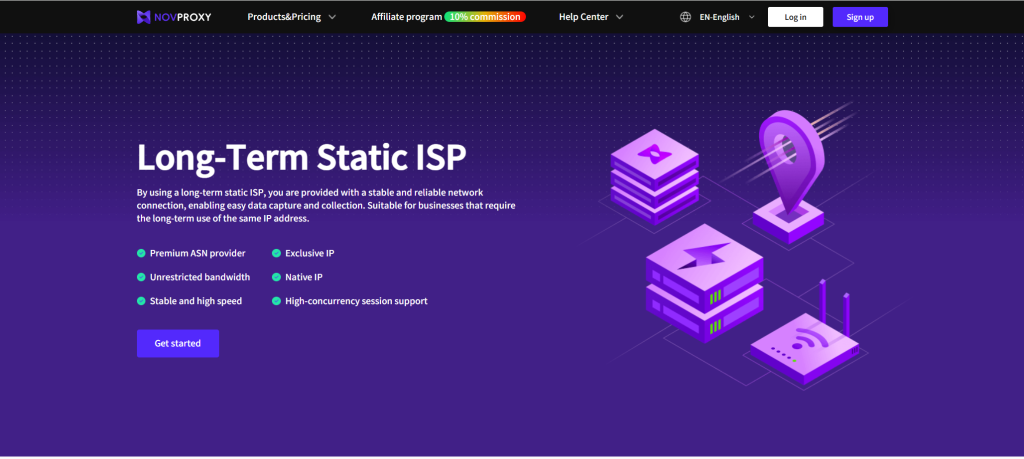
To address the IP challenges in Gemini student verification, NovProxy leverages its proprietary technical architecture to deliver three core advantages. These advantages precisely align with the network environment requirements of the verification process, providing technical support to overcome the IP purity bottleneck:
- Pure Residential IP Architecture to Mitigate Shared Node RisksWith access to a global residential IP pool of over 100 million addresses, NovProxy achieves full coverage of regions supported by Gemini verification (including the US, UK, Japan, etc.). These IPs originate from real household network scenarios, simulating the natural access patterns of regular users. This fundamentally reduces the likelihood of IPs being flagged as “abnormal nodes,” enhancing both the security and success rate of the verification process.
- Precise Geolocation Locking to Eliminate Node Switching InterferenceSupporting country-city level precise IP targeting, NovProxy ensures stable persistence of the outbound IP once the verification region is selected. This fully complies with Google’s authentication standard for “account regional information consistency,” effectively preventing verification failures caused by IP regional switching.
- High Stability and Low-Latency Transmission for Uninterrupted VerificationThrough technical optimizations, NovProxy achieves a 99.9% uptime rate and maintains response latency under 0.5 seconds. This ensures smooth network transmission across the entire verification workflow—from accessing the Gemini official website and submitting an edu email, to SheerID verification and payment method binding—preventing verification termination due to lag or disconnections.
Conclusion
In summary, the application window for Gemini student verification is time-limited, and IP purity is the critical bottleneck affecting verification success rates. The solution built on NovProxy’s core technical advantages effectively resolves this bottleneck. Not only does it meet the multi-dimensional verification requirements of Google’s authentication system at the technical level, but it also enhances practical usability by optimizing the user experience. This provides a reliable network environment guarantee for students to successfully access relevant benefits.