


In the past few months, the most talked-about topic among the Gemini user community has been “account suspension”. Many users have reported that their accounts were suddenly blocked, and the appeal process was extremely difficult. What’s going on here? Why did Google suddenly increase its risk control measures? More importantly, how can we protect our accounts?
The extension of student certification has led to a registration rush, and risk control has suddenly tightened.
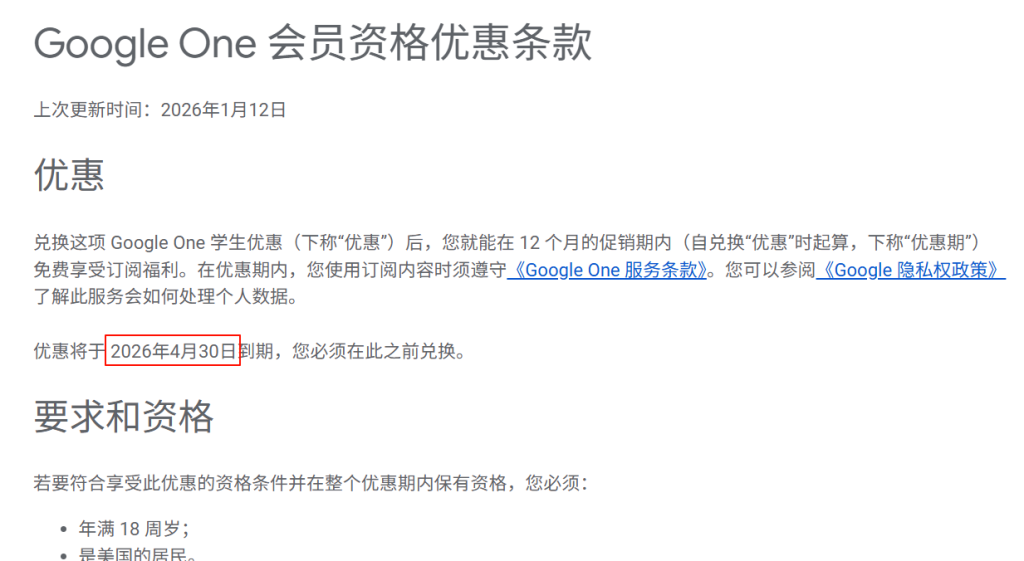
Just before this wave of account bans, Google officially announced an important piece of news: The student certification for Gemini has been postponed until April 30, 2026. This means that the originally expiring student discount program has been extended for another four months. A large number of users responded to the news and rushed to register new accounts to apply for student certification.
According to community feedback, within one week after the delay announcement was made, the number of new registered accounts increased by over 300%. This abnormal surge in registrations directly triggered Google’s risk control system, resulting in a large number of new accounts being banned within 24 hours of registration. Many users, who had just completed student verification and had not yet had a chance to use their accounts, saw the message “Suspicious activity detected” on their accounts.
The truth behind the ban wave
Starting from the end of 2024, Gemini did indeed undergo a period of strict account suspension. This was not an isolated incident but rather a systematic action by Google to clean up “problem accounts”. Many users were still using their accounts normally the day before, but the next day they found their accounts suspended when logging in.
This wave of account bans has several distinct characteristics: newly registered accounts are more likely to be targeted, accounts that frequently switch IP addresses carry the highest risk, and accounts using shared proxies are almost all subject to bans. Google’s AI risk control system has become more sensitive, triggering the ban mechanism even with minor abnormalities.
Especially for the accounts related to student verification, due to the announcement of the extension, a “hoarding benefits” craze was triggered. Google has been extremely strict in reviewing such accounts. Some users reported that they successfully verified their identities as students, but their accounts were immediately banned a few hours later just because their IP addresses were not “clean” enough.
Latest Risk Control Logic Analysis
Google’s risk control system mainly focuses on two dimensions: the login environment and usage behavior.
An abnormal IP environment is the number one threat. The system will record the user’s IP address. If it detects that the IP address changes too frequently, such as being in the United States in the morning, in Japan in the afternoon, and in Germany in the evening, this “instant movement” behavior will be regarded as account theft or batch operations. Especially for users who use public proxies or data center IPs, because these IP segments are often shared by multiple people, they have already been blacklisted in Google’s blacklist.
Device fingerprint detection is becoming increasingly strict. Google not only checks the IP address, but also analyzes the “fingerprint” information of the device: browser version, screen resolution, Canvas fingerprint, WebGL data, time zone setting, language preference, etc. If multiple accounts are logged in on the same device, or if the fingerprints of multiple devices are highly similar, the system will consider this as a “batch operation”.
The student authentication environment testing is even more stringent. According to the test results, among the users who failed the student authentication, 35% were due to “environmental detection” issues, including the network environment being judged as unsafe, abnormal matching of school information, and overly concentrated authentication requests, etc.
The main reason for the account ban
Based on the feedback and observations from a large number of users, the current account suspension mainly occurs in the following situations:
The instability of IP addresses is the most common reason. Many users, in an effort to save money, use free VPN services or cheap shared proxies. The quality of these IP addresses varies greatly and they may have been used by countless people before, leaving a “record” with Google. Once using these IPs to log in, it’s basically like inviting trouble.
The eagerness of new accounts to verify the identity of students is also a risky behavior. For a newly registered Google account, if it immediately applies for student authentication and then starts using it intensively, the system will consider this not as normal user behavior. Normal users should first use other services like Gmail and YouTube gradually and build trust over time.
Abnormal student certification materials will also trigger risk control. Using an alumni email address, an email address from a graduated student, unclear or expired uploaded student ID information, or unreasonable filling of graduation year, etc., will all lead to certification failure and even account blocking.
If the number of applicants for the same school increases too rapidly within a short period of time, it will also trigger system alerts. Especially for some less-known institutions, if there are a large number of certification requests in a short span of time, they will be classified as “batch operations”.
How to appeal for the lifting of the ban
If you unfortunately get your account banned, there is still some hope. According to successful cases, there are several key points to keep in mind when making an appeal:
First of all, the reasons for the appeal should be sincere and reasonable. Do not fabricate complicated technical terms; simply state the situation. For example: “Due to geographical reasons, I need to use a VPN. I am a genuine student user and I hope to have my account restored. Thank you.”
Secondly, you need to prove that you are a “real” student. The AI review system of Google mainly checks whether you are a genuine user. When making an appeal, you can say: “I am a real student and Gemini is very important for my studies”, and briefly describe your learning scenario.
If the account is bound to a mobile phone number, the probability of being unblocked will be much higher. Because the mobile phone number is an important proof of one’s real identity, it enables Google to confirm that this is not a batch-registered fake account.
Special reminder: Rejection of student verification will not affect the security of your Google account, nor will it prevent you from resubmitting the materials later. You can change the verification method and try again.
The Importance of Static IP
After this round of account suspension, more and more users have realized the importance of static IP.
A static IP refers to a fixed and unchanging IP address, in contrast to dynamic IP which changes every time a connection is made.
The greatest advantage of a static IP is its stability. Your account always logs in from a fixed IP address. To Google, this is considered normal user behavior. Just like you always access the internet from the same neighborhood and the same building every day, the system won’t consider you have any issues.
For student authentication, a stable network environment is one of the key factors for successful authentication. Many users fail to authenticate not because of insufficient qualifications, but because the network environment is judged by the system as “unsafe/unreasonable”.
In contrast, although dynamic IP addresses are relatively inexpensive, they carry extremely high risks. Today this IP might be in use by a normal user, but tomorrow it could be used for malicious purposes, and the day after that it might be given to you again. Such IP addresses already have a bad reputation at Google, and using them is equivalent to inviting trouble.
Exclusive static IP is more secure. This means that this IP is exclusively used by you and will not be affected by others. Although the cost is slightly higher than that of shared IP, compared to the loss of account being blocked, this investment is worthwhile.
Novproxy: An Excellent Choice for Static IP Addresses
Among the numerous static IP service providers, Novproxy is currently regarded as a highly reputable option.
According to the information on their official website, they specialize in providing high-quality overseas residential IPs, covering over 190 countries and possessing more than 100 million residential IP resources.
The static ISP service provided by Novproxy is particularly suitable for Gemini users, especially those who need student authentication. For only $3 per month, you can obtain a dedicated native IP with unlimited data usage. This IP is “clean” as it has no history of being abused, significantly reducing the risk of being banned.
Their IP resources come from genuine ASN providers, which means in Google’s view, these IPs are just like ordinary users’ home networks and will not trigger risk control. Moreover, it supports long-term renewal and the longer it is used, the more stable it becomes.
Regarding the requirements for the student authentication environment, the residential IP provided by Novproxy can perfectly simulate the actual overseas student network environment, helping users successfully pass the environment test of the SheerID verification system.
Technical support is also a highlight of Novproxy. It offers 24/7 customer service, allowing users to seek help at any time when encountering connection issues. For users who are not familiar with proxy settings, they provide detailed usage tutorials, offering step-by-step guidance from registration to configuration.
Survival Operation Guide
To avoid having your account banned, in addition to using a static IP, you also need to pay attention to several operational details:
One account corresponds to one environment. Each Gemini account should be equipped with an independent browser environment. You can use different browsers or take advantage of the multi-window function of the fingerprint browser. Ensure that the fingerprint information of each environment is different to avoid being associated.
Student verification should be carried out with “deliberate and meticulousness”. Do not rush to complete all verification steps at once. It is recommended to proceed over several days. First, complete the account information, then gradually carry out the student verification process, giving the system a “natural” feel.
The certification materials must be genuine and clear. The student ID and enrollment certificate uploaded must be legible. The file resolution should be above 1200×800 pixels to ensure that OCR can accurately recognize them.
Avoid the peak authentication period. Due to the announcement of the delay, there has been a surge in registrations. It is recommended to avoid the peak period for authentication and choose the morning or afternoon hours on weekdays to reduce the risk of being mistakenly identified as a “batch operation” by the system.
Build trust for the account. For newly registered accounts, don’t rush to use Gemini and student authentication right away. Instead, use other services like Gmail and Google Drive normally, and gradually build Google’s trust in the account.
Regularly check the quality of the IP. Even if a static IP is used, it is necessary to regularly check whether the IP has been blocked. You can search for “IP blacklist detection” to ensure that the IP being used has no bad records.
This round of account suspension was indeed quite intense, but as long as we understand the risk control logic and take the right protective measures, we can definitely avoid the fate of being suspended. Remember, Google is not trying to drive away all users; instead, it aims to clean up those “abnormal” accounts. As long as we behave like normal users, there is no need to worry about being suspended.
Invest in a stable static IP and develop good usage habits to ensure your Gemini account safely survives this round of risk control storms. After all, in this AI era, a good Gemini account is our productivity tool and deserves careful protection.